Speaking guides
All About the TOEFL Speaking 2026
All About the TOEFL Speaking 2026
Welcome, little TOEFL explorer! Nutty the Squirrel here, ready to guide you through the TOEFL Speaking section.
The Speaking section of the TOEFL might look scary at first, just like a tall tree full of tricky branches. But don’t worry! With the right plan (and maybe a few practice nuts 😉), you can climb it step by step.
Many test-takers say that Speaking is the hardest part, mostly because most test-takers haven’t lived or studied in a fully English-speaking place. But relax! In this series, I’ll guide you through every question type in the Speaking section and help you feel confident and ready to get a great score.
In this article, you’ll get a general overview of the Speaking section. In the next ones, we’ll jump from branch to branch and explore each task in detail.
So grab your crunchy snacks and get ready to stash away some knowledge!🐿️
Let’s go!
What Changed in the 2026 TOEFL Speaking Section?
On January 21, 2026, ETS made big changes to the TOEFL Speaking section. The old four speaking tasks were removed and replaced with two new tasks.
This means that the old independent and integrated speaking tasks are no longer part of the test. The reading passages, listening recordings, and preparation time that students used before have also been removed.
Let’s take a look at the main differences between the old and new Speaking sections.
| Feature | Old Format (Before 2026) | New Format (2026) |
|---|---|---|
| Tasks | 4 tasks (independent and integrated) | 2 tasks (Listen and Repeat + Interview) |
| Questions | 4 questions | 11 questions |
| Duration | About 17 minutes | About 8–10 minutes |
| Preparation Time | 15–30 seconds for each task | No preparation time |
| Scoring | 0–30 scale | 1.0–6.0 band score (plus 0–120 overall score) |
| Scored By | Human raters and AI | AI only |
As you can see, the new Speaking section is much shorter than before. However, because there is no preparation time, it makes it a bit more challenging.
This is one of the biggest changes in the new TOEFL. In the past, students had a short time to organize their ideas before speaking. Now, they must listen carefully and respond right away.
In the next sections, we will explore each new speaking task in detail and learn the best strategies for getting a high score on the TOEFL Speaking section. Let's keep gathering TOEFL knowledge, one acorn at a time! 🌰🐾
Overview of the TOEFL Speaking Section
The new Speaking section lasts about 10 minutes and has 2 tasks:
- Task 1: Listen and Repeat
- Tasks 2: Take an Interview
Listen and Repeat (Questions 1–7)
The first part of the TOEFL Speaking section is called Listen and Repeat.
In this task, you will hear seven sentences that are all connected to the same situation. A simple image will be shown on the screen to help you understand the context.
For example, the sentences might be about:
- Giving a tour of a place on campus
- Following safety rules in a chemistry lab
- Booking an appointment on a university website
- Explaining how to use a campus service
Each sentence gives a new piece of information about the same situation.
After you hear a sentence, there will be a short pause followed by a beep. After the beep, you must repeat the sentence exactly as you heard it.
You are working a part-time job at a grocery store near campus. You are being trained to assist customers. Listen to your trainer and repeat what he says. Repeat only once.
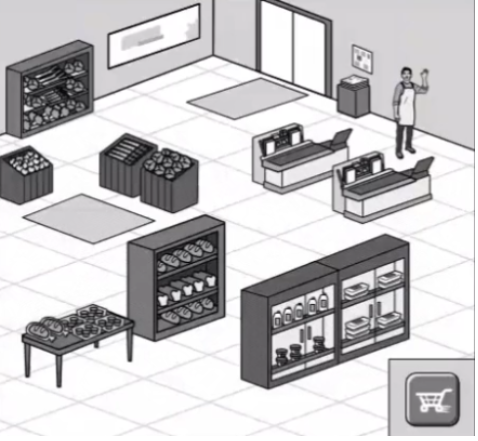
As the task continues, the sentences become longer and more difficult. Think of it like climbing a tree, the higher you go, the bigger the challenge! 🌳🐾
The seven sentences are divided into three difficulty levels:
| Sentence Number | Difficulty | Length |
|---|---|---|
| 1–2 | Easy | 9–11 syllables |
| 3–5 | Medium | 14–16 syllables |
| 6–7 | Hard | 19–23 syllables |
- Easy Sentences (1–2)
These sentences are short and simple. They usually contain one main idea and basic vocabulary.
- Medium Sentences (3–5)
These sentences are a little longer and may include more details, longer phrases, or more complex grammar.
- Hard Sentences (6–7)
These are the longest sentences in the task. They often contain several pieces of information, so you need to listen very carefully and remember what you hear before repeating it.
Read more about this section on TOEFL 2026 Speaking TASK 1.
Take an Interview (Questions 8–11)
The second part of the TOEFL Speaking section is called Take an Interview.
In this task, you will participate in a simulated interview. You will see an interviewer on the screen in a short repeating video, and the interviewer will ask you four questions about a topic from everyday life.
How Does This Task Work?
The interviewer asks a question, and you respond naturally, just as you would in a real conversation.
For example, you might hear:
"What is the best way to learn a new skill?"
Then you should start speaking right away and continue for as much of the 45 seconds as possible.
As part of a university project, you have agreed to take part in a short research interview about health and wellness habits. A graduate student conducting the research will ask you some questions online.

The topics are simple and familiar. For example, the interview may be about:
- Exercise and health
- Study habits
- Reading habits
- Travel experiences
- Hobbies and interests
- Lifelong learning
For each question, you will have 45 seconds to answer.
Important notes to remember:
- There is no preparation time.
- You must begin speaking immediately after the question ends.
- There is no beep before your answer.
- You can hear the questions, but you cannot read them on the screen.
Because there is no preparation time, many students lose a few seconds while thinking about what to say.
Read more about this section on TOEFL 2026 Speaking TASK 2.
How to Improve Your Speaking
Improving your speaking has two main parts:
- General English speaking skills
- TOEFL-specific speaking skills
Even though you’re studying for TOEFL, your first step is to make your general English stronger. Once your general speaking feels natural, your TOEFL Speaking score will grow like a tree from a tiny acorn!
Let’s look at both parts.
Part 1: Improving General Speaking Skills
Here are some fun, simple, and powerful ways to improve your English speaking every day:
Think in English
Try to think about your daily life in English.
For example, when you wake up, say in your head: “I’m brushing my teeth,” or “I need coffee!”
You can even say your thoughts out loud. It helps your brain and tongue get comfortable with English sounds.
Use the Shadowing Technique
Watch English videos or movies, pause after each sentence, and repeat exactly what you hear like an echo!
This is called shadowing, and it’s one of the best ways to improve pronunciation, rhythm, and fluency.
(If you feel silly doing it, good! That means you’re learning.)
Speak with Others in English
Talk to your friends in English, even for a few minutes a day.
If your friends are also studying TOEFL, practice together!
No English-speaking friends nearby? No problem! You can join free online speaking clubs to meet other learners.
The more you speak, the more confident and natural you become.
Talk to AI Tools
Try talking to AI apps like Pi or ChatGPT.
It’s like having a friendly native speaker who’s always awake!
These tools help you build fluency, confidence, and quick thinking, without feeling nervous or shy.
Part 2: Improving TOEFL Speaking Skills
Even fluent English speakers sometimes get low TOEFL Speaking scores, because TOEFL needs specific strategies, not just good English.
For example, if you don’t know how to brainstorm fast, it’s hard to give a complete 45-second answer. But don’t worry, I’ll teach you everything you need in this series!
Here’s how to get better step by step:
In Speaking articles I’ve gathered the best tips and tricks from many experts to help you master every part of the TOEFL Speaking section, from timing to structure to confidence.
Reading about TOEFL is helpful, but practice is the real magic!
When you practice alone, it’s easy to miss your own mistakes.
That’s why getting feedback from teachers or AI tools is so valuable.
It helps you spot weak points, fix them fast, and see your progress clearly.
Q: Does having a native accent help my score?
A: Nope! Clarity and natural rhythm matter most.
Q: How can I see my improvement?
A: Take mock tests, track your progress, and use Nutty English correction service to find weak spots and improve.
A Nutty Farewell
Wow, little TOEFL squirrel! You’ve jumped through all the Speaking tasks and now you know how the section works.
Remember: it’s okay to make mistakes. Even the fastest squirrels sometimes slip!
The key is to keep practicing, hop branch by branch, and soon your Speaking skills will grow strong and confident.
So, grab your voice, jump into practice, and enjoy the journey! Your TOEFL Speaking score is waiting at the next branch!